

HRM Blog & Articles
A brief history of Airless

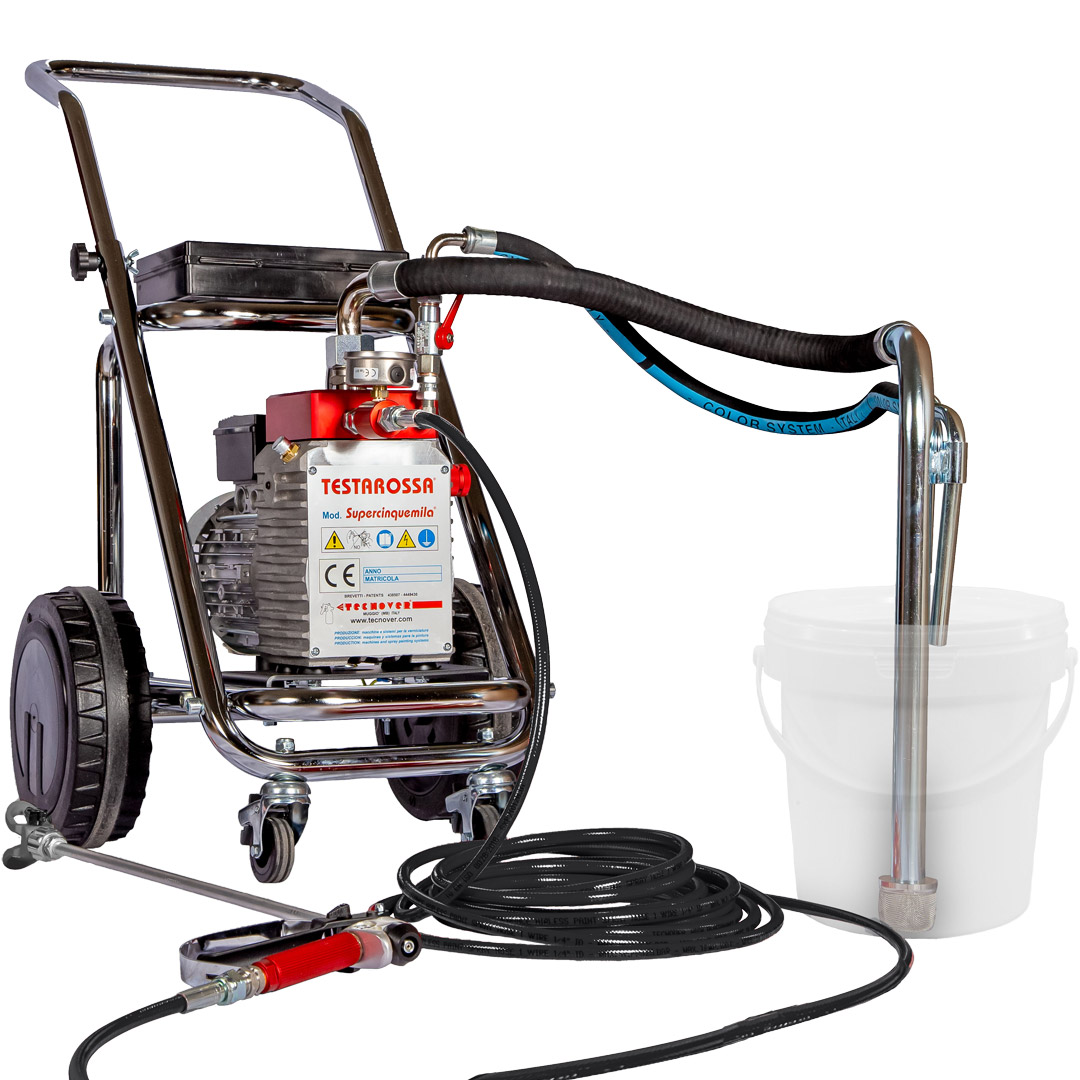
A Brief History of Airless Spraying
The history of airless spray machinery is a fascinating journey of parallel innovation, where breakthroughs in manufacturing met advancements in materials science. While the complete timeline is not thoroughly documented, looking at the roots of the industry’s pioneering manufacturers reveals how modern spraying technology came to be.
The Pioneers: How Graco and Wagner Built the Industry
The global airless market was largely shaped by two distinct engineering breakthroughs occurring on opposite sides of the Atlantic Ocean.
The Western Front: Graco (USA)
Graco, already an established pump manufacturer, produced its very first airless paint pump in 1957. This revolutionary unit was a modified pneumatic piston paint transfer pump, re-engineered with an increased pumping ratio to force fluid through a specialized nozzle. This milestone marked the birth of airless spraying in the United States. With the capacity to grow rapidly, Graco quickly became the leading manufacturer of airless piston pumps worldwide—and today, you can find their equipment on almost any job site.
The European Front: Wagner (Germany)
Across the ocean in Germany, a company named Wagner was already manufacturing hand-held spray guns, but had not yet ventured into heavy-duty airless machinery. That changed in 1964 when they produced their first electric diaphragm airless unit. Wagner’s innovation took off rapidly, and by 1970, they had become the largest manufacturer of airless machinery in Europe.
Over the decades, these two industry giants expanded globally, acquiring numerous smaller manufacturers to emerge as the two largest groups in the field. The simplest way to witness their massive impact today is to look at how many cheaper, entry-level copies of their classic equipment designs exist across the market.
The Material Science That Made Airless Possible
An airless pump operates under extreme pressure, and the abrasive nature of everyday paint causes immense wear on internal components. Without the development of specific hard compounds and specialized plastics, modern airless spraying would simply be impossible.
1. Tungsten Carbide (The Defeater of Friction)
Discovered in the early 20th century, Tungsten Carbide only entered widespread industrial use in the 1940s for mining, specialized manufacturing, and wartime production. It quickly proved to be the perfect material for high-pressure spray components.
To explain its importance simply: we have had numerous customers over the years attempt to save on the relatively high cost of official replacements by having their own valves and seats machined locally out of Stainless Steel. As we always warn them, the unit operates for a very short time and then completely stops. Why? The abrasive paint, forced at extreme pressure, rapidly “chews” away the stainless steel. Only true, industrial-grade tungsten carbide stands up to the abuse.
2. High-Performance Plastics: HDPE and Teflon
The other crucial materials that allowed airless machines to function are specialized plastics—specifically High-Density Polyethylene (HDPE) and Polytetrafluoroethylene (PTFE, commonly known as Teflon). Discovered in 1933 and 1938 respectively, both materials entered mass production by the 1950s.
Because they are highly solvent-resistant and wear-resistant, they are the only materials capable of serving as internal pump seals. To see why standard materials fail, just drop a common rubber O-ring into solvent thinners or acetone; it will instantly swell up drastically. Inside an airless sprayer, standard rubber would fail immediately. Without the mid-century development of Teflon and HDPE, the spraying machines we rely on today would not exist.
The Future of Airless Spraying
The future of airless technology is incredibly bright, with market adoption growing every single year. Because these units maximize material transfer efficiency and minimize waste, they are significantly friendlier to the environment than older conventional spray systems. Year after year, more commercial painting companies are adopting airless technology as their ultimate solution to boosting on-site productivity and increasing profitability.
(Author: M. Gisi, 2008)